

Social calls of the Common pipistrelle (Pipistrellus pipistrellus)
I must admit that I am unsure if the following is some sort of sociolocation. On two different occasions bats were seen swarming around this location in the early morning, but no roost location could be detected. The echolocation appears non-typical, with pulses in clusters. The fact that the call after 0,120 s in the recording goes up in frequency at the end, while the peak frequency is around 60 kHz, shows that it is not a regular echolocation call.



Another example of a rare modified echolocation call. The call around 2,610s in the recording (most right call in the snippit) is hooked at the start. It was recorded in the vicinity of a maternity roost in the early morning when bats were seen swarming, tapping the roost the roost entrance and entering the roost.
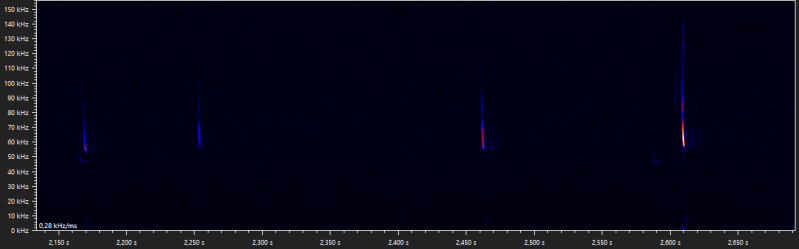
Date of recording: 2026-06-08 Recorded by: Boaz van Die Audio file: 1142556
A common pipistrelle appeared to be startled by the appearance of a cyclist and flew straight into a roost, where he began to produce a lot of type A/B social calls for a pronlonged period of time.




Two common pipistrelles were seen flying into their roost in the morning. These type B social calls were emitted from inside the roost.

Date of recordings: 2026-04-25 Recorded by: Sarah Mahie Audio files: 1137691
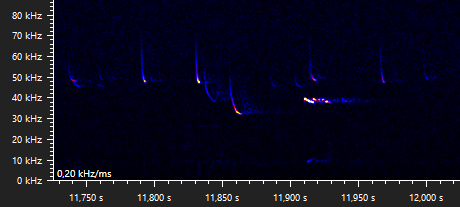
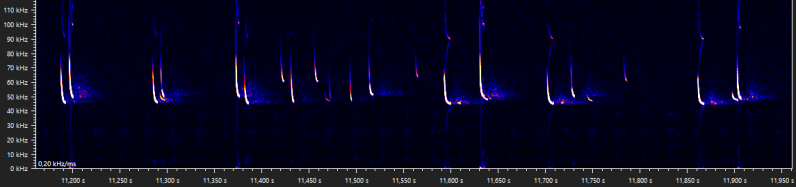
We start this year with type C social calls. A few that are lower in frequency (fishhook-shaped) than the regular echolocation calls of the common pipistrelle and a few that are higher in frequency. These social calls were recorded in the vacinity of a roost where numerous individuals were present, possibly housing a maternity group. The echolocation calls of a Nathusius' pipistrelle are also present in the recording.
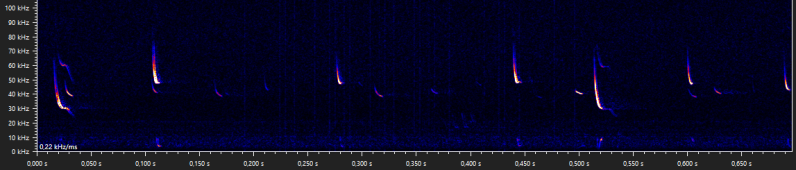
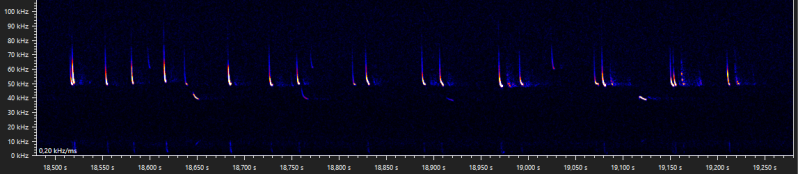
A few more high frequency type C social calls that were emitted whilst two common pipistrelles were interacting with each other. The echolocation calls of a third common pipistrelle is present as well in the recording.
Date of recording: 2026-04-21 Recorded by: Sander Boersma Audio file: 1105978
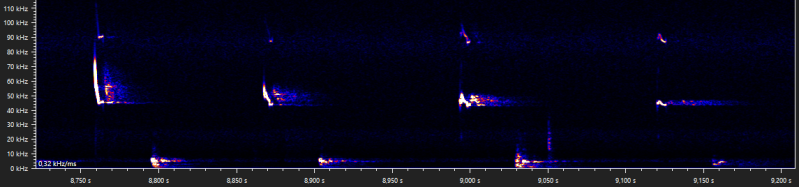
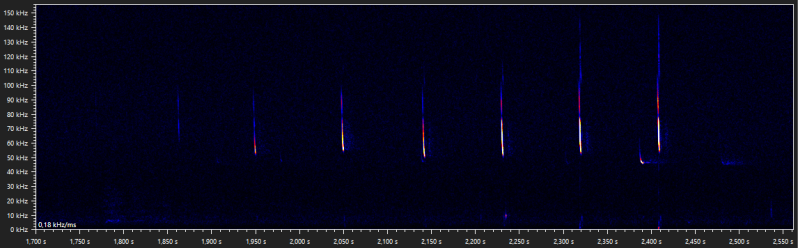
The following recordings do not contain social calls, but these are one of the most oddly-shaped echolocation calls I have seen from a common pipistrelle.


Date of recording: 2026-05-28 Recorded by: Boaz van Die Audio file: 1138497
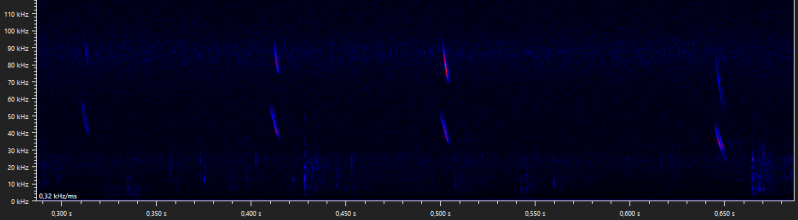
Calls of whom I am sure if they need to be categorized as social calls or sociolocaton:

Date of recording: 2026-07-07 Recorded by: Sander Boersma Audio file: 1154274
The following two snippits are recorded near a lake. The following first two snippits show some more type C social calls in the shape of fish hooks. The last snippit shows an unusual call sequence that resemble recording 915774 of a Nathusius' pipistrelle.



The first snippit shows two type D social calls: a regular type D social on the left and a type D social call with two components joined on the right. The second snippit shows type C social calls. The third snippit contains type D social calls, the first being a 6-compenent version and the latter two being 4-component versions.



More social calls emitted from within the roost, giving away its location:

Date of recording: 2026-05-23 Recorded by: Boaz van Die Audio file: 1138015

Date of recording: 2026-06-20 Recorded by: Sarah Mahie Audio file: 1148412


And type C social calls recorded while two common pipistrelles were entering their roost in the early morning:

Date of recording: 2026-05-24 Recorded by: Boaz van Die Audio file: 1138102


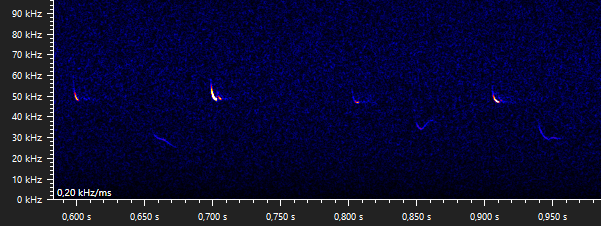
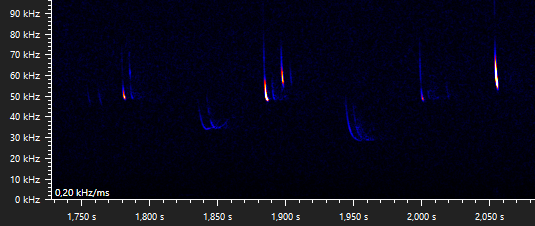
More type C social calls that were emitted while bats were entering their roost in the early morning. Five common pipistrelles were counted leaving the roost in the evening. This gives us a clue that these social calls were more likely used for tandem flight instead of communication from (or with) juveniles.
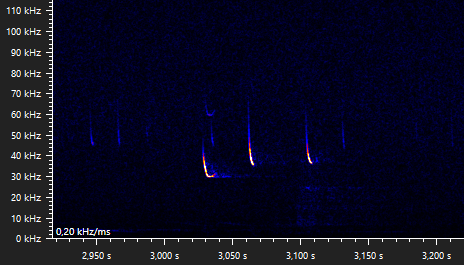
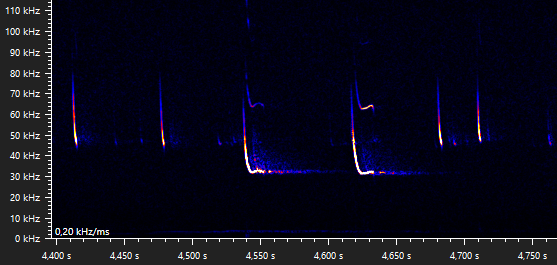

Date of recording: 2026-06-05 Recorded by: Sarah Mahie Audio file: 1141759
Just like these type C social calls, whom were recorded while bats were swarming in front of and tapping their roost before entering in the early morning.

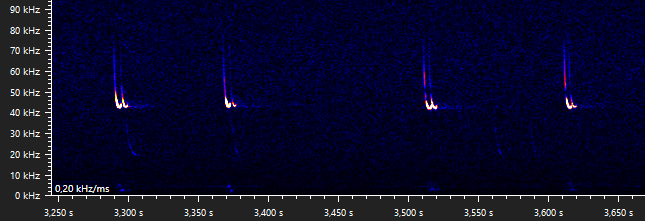
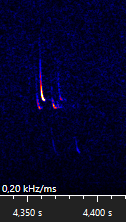

The first two snippits show type B social calls that were emitted from within the roost before emergence at an earlier moment the same night as the type B and type C social calls shown after. These were recorded at a known maternity roost.
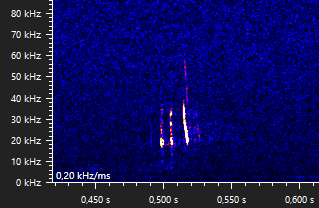



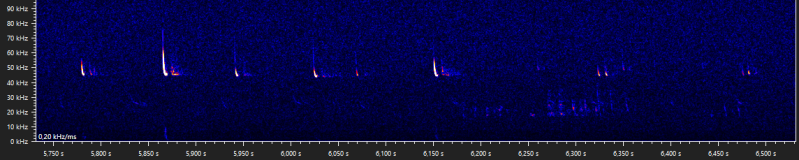


I didn't notice the following type C social calls (very similar to the examples of the previous shown type C social calls) in the field, only after analyzing the sounds on the computer afterwards. Since these type of calls are emitted from within the roost, I will need to check this location with extra care during the next field visit.

Date of recording: 2026-05-29 Recorded by: Sarah Mahie Audio file: 1138648
The following recordings contain slightly unusual type D socials. They were emitted before a bat was seen entering its roost in the early morning, in the same area as the previously shown recording.




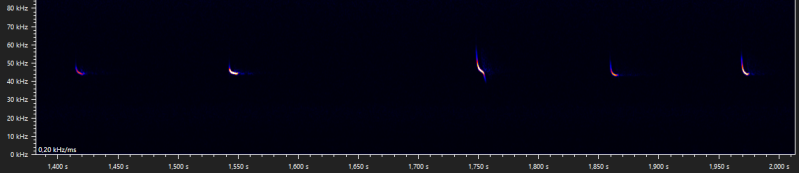
Date of recording: 2026-06-16 Recorded by: Sander Boersma Audio file: 1146181
The first snippit is recorded whilst bats were swarming in front of the maternity roost around 3:45 and the second snippit is recorded whilst bats were swarming and entering the roost around 4:21 in the early morning.


The previous night, when the maternity roost wasn't found yet, these type C social calls were recorded in the vicinity of the roost.
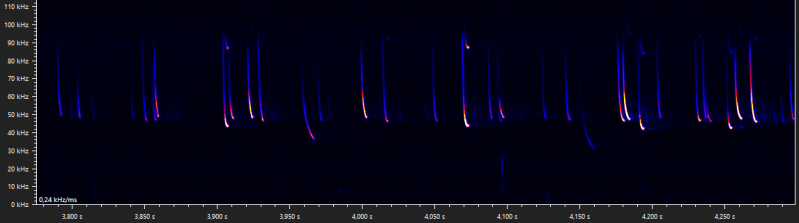
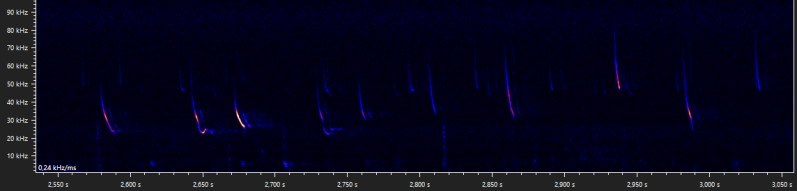
Date of recording: 2026-06-28 Recorded by: Sander Boersma Audio file: 1147291
A different location the same night as previous recording:
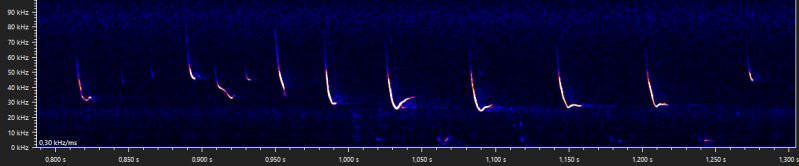
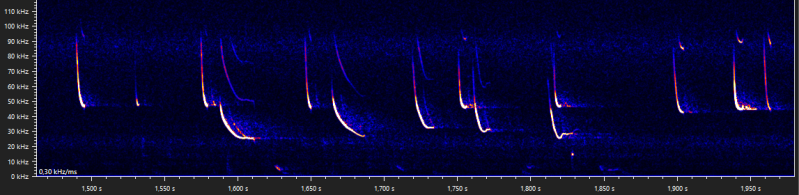
Date of recording: 2026-06-17 Recorded by: Sander Boersma Audio file: 1146629
Recorded the night before in the vicinity of the maternity roost:
A stunning 8-component version of the type D social call:
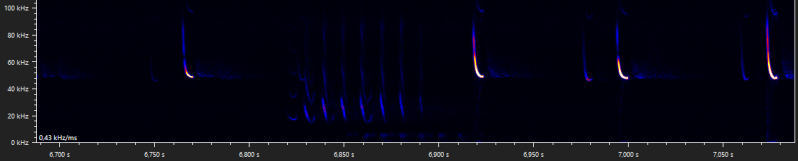
Date of recording: 2026-06-18 Recorded by: Sander Boersma Audio file: 1146768
Type C social calls were recorded throughout the night at the same roost site:

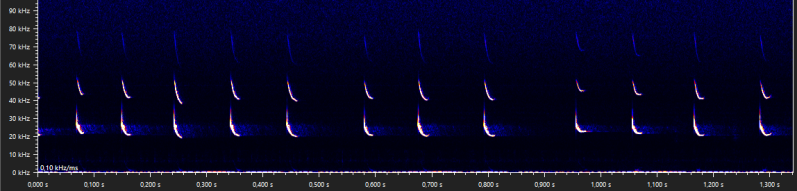
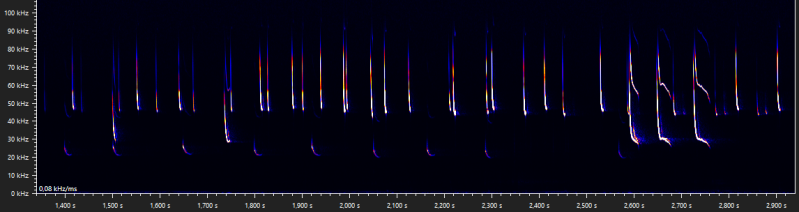
Date of recordings: 2026-06-20, 2026-06-21 Recorded by: Sarah Mahie Audio files: 1148503, 1148505, 1148507, 1148509, 1148511, 1148512, 1148513, 1148514, 1148515, 1148516, 1148518, 1148519, 1148521, 1148523 (Batlogger), 1148527, 1148530, 1148531, 1148535, 1148536, 1148540, 1148542, 1148545 (Echo Meter)
All recordings are licensed under the following Creative Commons Attribution-NonCommercial-NoDerivs 4.0 license and in courtesy of Sarah Mahie.
All sonograms are screenshots of the recordings imported in the ultrasound analysis software BatExplorer 2.2 (Elekon, Switzerland).
Bibliography:
- Neil Middleton, Andrew Froud and Keith French (2022). Social Calls of the Bats of Britain and Ireland. Second edition. Pelagic Publishing.
Create Your Own Website With JouwWeb